
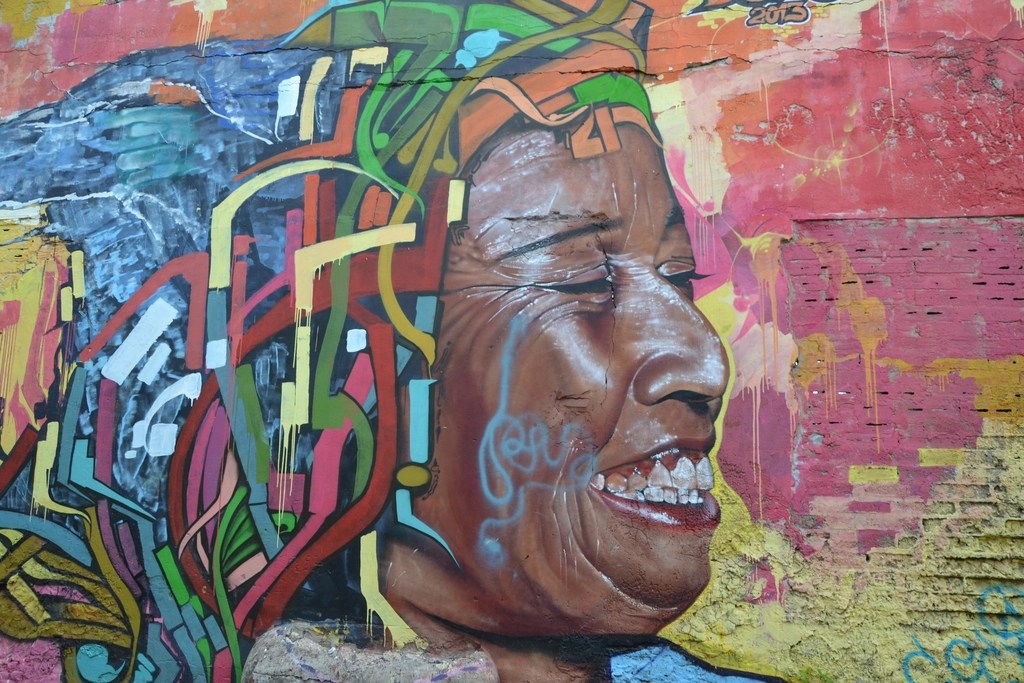
At the VU Women@VU International Women’s Day gathering this year, I found myself thinking about absence.
Not only who is present in the room, but who goes missing from our frameworks. Whose names fall away. Whose lives remain insufficiently held by the language, institutions, and categories meant to account for them. During the event, Ismintha Waldring spoke about those who get forgotten, those who are lost, those whose names are removed because the framework itself does not know how to keep them. That stayed with me, not only as an idea, but as a feeling. The event itself was shaped around questions of intersectional safety, inclusive education, and academic success, and perhaps because of that, it felt like a place where such forgetting could be named with care.
And yet what I remember just as strongly is this: there was so much love in the room.
Love in the midst of loss. Love in the act of naming what is broken without letting brokenness have the final word. Love in the insistence that we must still make space for joy, even now. When Amisah said, feel joy, laugh, something in me stirred. Arundhati Roy came to mind, that sense one sometimes gets from her work and public presence that laughter is not frivolity, but defiance. A kind of militancy of the spirit. Not laughter because grief is absent, but laughter because grief has already taught us too much, and we refuse to let it have every chamber of the self.
But the mind was tired.
Tired from the news, from war, from brogliarchies and their endless rehearsals of power. Tired from caring about things that I cannot control and yet cannot not feel. Tired from that peculiar modern condition in which one remains politically awake, morally alert, emotionally porous, and slowly, almost imperceptibly, begins to calcify.
There are times when the world becomes too much world.
Too much war. Too much extraction. Too much cruelty dressed up as policy, power, strategy, necessity. Too much watching people with influence behave as though history were a private instrument, theirs to bend, bruise, barter. Too much living under systems so swollen with noise and entitlement that ordinary tenderness begins to feel like an endangered language.
And then there is the quieter damage, what all this does to the spirit.
Not always a dramatic breaking. Sometimes it is subtler than that. A dimming. A thinning of colour. You still care, perhaps that is precisely the problem, but care begins to feel scorched. You carry what you read, what you witness, what you know. And somewhere along the way, the inner world, once porous and alive, begins to stiffen.
When that happens, I think we must go where beauty still has temperature.
We must go somewhere warm, somewhere that does not ask us to perform our competence or our endurance. Somewhere soaked in beauty. A garden, perhaps. A sea-facing town. A museum room with a painting that quiets the pulse. A film that returns one to slowness. A poem that restores contour to a tired inner life. A corner of the world where light falls tenderly on leaves, stone, water, human faces. A place where, for a moment, one feels not defended, not alert, not tasked, but held.
This is not denial. It is not retreat from history.
It is how some of us survive without surrendering the finest parts of ourselves.
I think often of Arundhati Roy’s The God of Small Things. What stays with me is not only the story, but the scale of attention. The novel understands that the smallest things are never merely small. Heat, smell, touch, a child’s perception, a tremor in the atmosphere, these are not decorative details. They are how a world reveals its truth. Roy teaches, with devastating tenderness, that the intimate and the historical are never really separate. The soul registers politics in texture, in breath, in what is permitted to flourish and what is forced into silence.
When the larger architecture of the world begins to feel brutal and immovable, I return to that lesson. Smallness is not insignificance. It is a form of refuge. Sometimes salvation enters quietly, through late afternoon light, the scent of wet earth, the sight of flowers spilling over a wall as if empires have never existed. Sometimes one needs to stand before beauty simply to remember that one’s own interiority has not been fully conquered.
And then there is Käthe Kollwitz’s The Mothers, that unforgettable gathering of women who seem at once to grieve, shield, and endure. There is nothing ornamental about them. Their bodies form a fortress of care, a human barricade, a circle of protection against the madness outside. When I think about war, about the obscene repetition of organised destruction, I think of that work. I think of how tenderness can become structure. How care can become resistance. How shelter is not weakness, but moral force.
Art like this does not soothe by pretending everything is all right. It does something more difficult, and more necessary. It tells the truth without abandoning us to it.
And poetry, especially poetry, has long been one of the places I go when the spirit has grown tired of prose explanations. Audre Lorde’s A Litany for Survival remains one of those poems that does not flatter the reader with false comfort. It stands beside fear and names it. It knows precarity. It knows what it means to live without guarantees. And still, it insists on the necessity of voice, of speaking, of continuing, of refusing erasure.
There are lines in some poems that do not merely move us, they reorganise us.
That is what great poetry can do. It can place a hand on the spine of the self and say: remain. Not because the world is gentle. Not because justice is assured. But because silence has never saved anyone worth becoming.
I think too of watching Agent of Happiness in the Honours course on happiness, and of the quiet way it stayed with me. The documentary follows Bhutanese happiness surveyors travelling through the country asking people about their lives in the context of Gross National Happiness.
What moved me was not the fantasy that happiness can be neatly measured, but the opposite. The film’s tender reminder that joy, sorrow, longing, fatigue, dignity, and hope are always more unruly than any index. Watching it in the context of an Honours course on happiness made that experience even more resonant. It reminded me that happiness is not a shallow brightness, nor a denial of suffering, but a serious human inquiry, one that belongs as much to ethics, art, and politics as it does to feeling.
Perhaps that is why the Women@VU moment stayed with me so powerfully. Because there, too, in the midst of conversations about exclusion, erasure, and the insufficiency of frameworks, there was also an insistence on joy. Not decorative joy. Not compulsory optimism. But joy as stamina. Laughter as insistence. Warmth as method. A refusal to let critique become the only register in which we know how to live.
This is why I believe that when one becomes jaded, one must go deliberately toward warmth, beauty, literature, art, music, poetry, sky, sea, shade, colour, human presence. Not as an act of escape, but as an act of recalibration. To sit somewhere beautiful is sometimes to feel, however briefly, that the cosmos has not withdrawn its consent from tenderness. That it still supports fragile visions. That it still makes room for the small and the shimmering, even now.
And yes, the vision may be small.
A truer life.
A more ethical way of working.
A classroom shaped by care.
A sentence that says what one really means.
A refusal to be brutalised by the age.
A hope one is not yet ready to declare publicly.
A private vow to remain porous.
Small visions matter. Perhaps especially now.
We are often told, implicitly and explicitly, that only the grand gesture counts. That scale is the measure of seriousness. That only what dominates is real. But literature, art, poetry, and film have taught me otherwise. They have taught me that the interior life is not apolitical. That beauty is not frivolous. That to protect one’s capacity for wonder, for sorrow, for moral attention, is already to resist a world that wants us numb, efficient, and easily governed by despair.
A poem cannot stop a war. A painting cannot dismantle an oligarchy. A novel cannot resurrect the dead. A documentary cannot undo violence.
But without them, what in us remains capable of imagining another order?
What in us remains human enough to want one?
So when I feel the ash settling, when I feel myself hardening under the pressure of all I cannot alter, I do not always reach first for more information. Sometimes I reach for beauty. I go where light is generous. I go where language has been made luminous by someone else’s courage. I go where art has survived catastrophe and still speaks. I go where the body can remember ease, where the mind can unclench, where the soul can feel, once again, accompanied.
And in those places, I begin to understand something.
Beauty is not the opposite of political awareness. It may be one of the conditions that make political and ethical life bearable. It may be what prevents outrage from curdling into cynicism. It may be what keeps grief from becoming granite. It may be what reminds us that power, however brutal, is not the only principle by which the world is arranged.
There are blossoms. There are poems. There are paintings. There are films. There are rooms full of people speaking carefully about loss and still making space for laughter.
Sometimes that is enough to begin again.
And, I admit, that sometimes it is also not. And, that too is okay!
 Diligent Candy
Leave a comment