
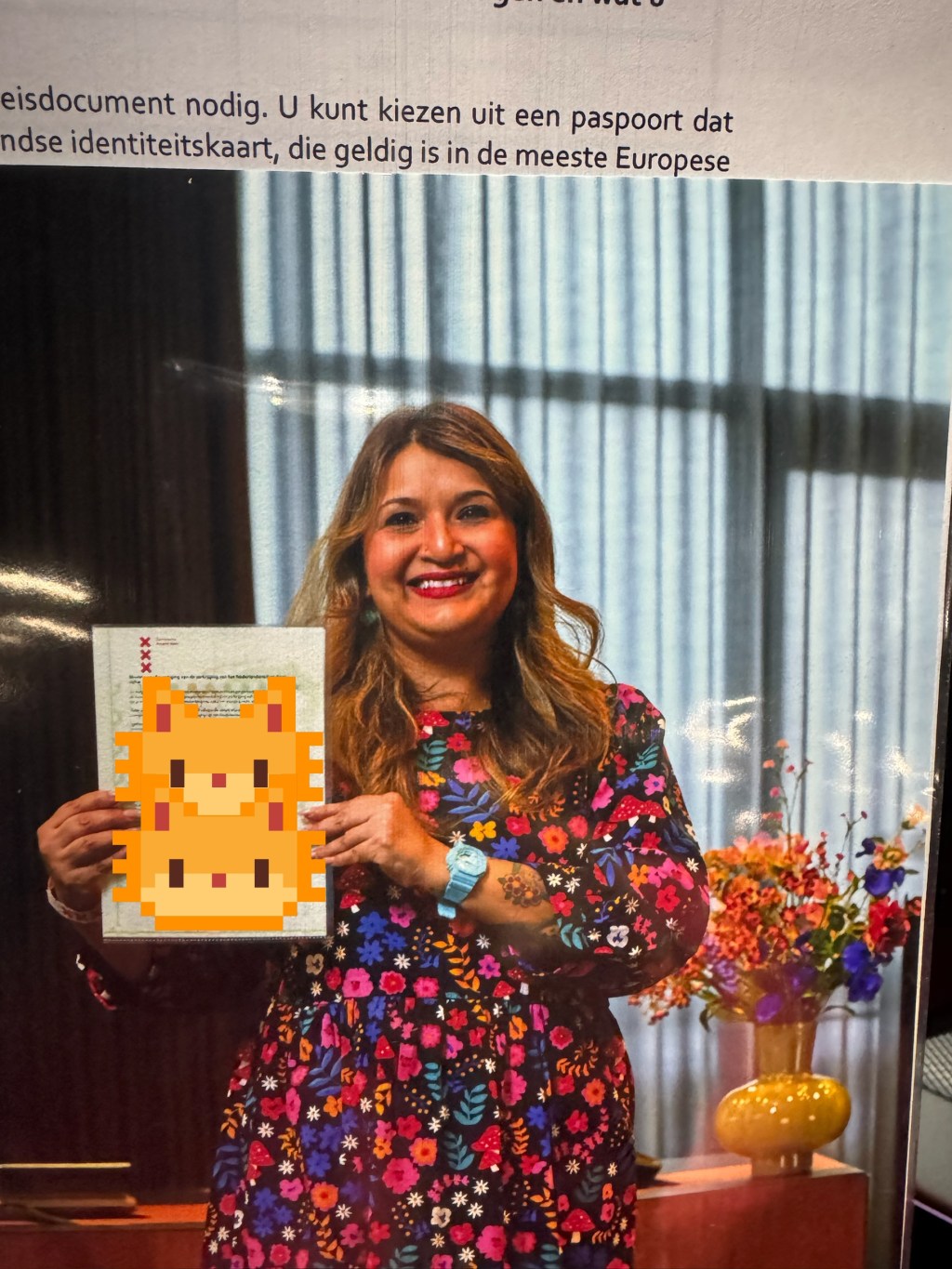
Today the state writes my name with a borrowed pen. Not the pen kept in velvet for lost inheritance certificates, but a pen found in the bottom of a drawer: a little cracked, ink clotted around the nib, the kind you warm with your breath to make it move. They call it citizenship by an exception. As if the law were a tight dress and my ribs insisted on breathing anyway. As if a door was measured in centimeters and I arrived measured in storms.
Does that make me exceptional? The word tastes like a paper cut, thin, bright, stinging. Exceptional is a museum word, a glass case word. But I have never fit in glass, never stood still long enough for labels. I am the fingerprint smudged across the label. I am the label that keeps detaching, drifting down the wall, as the curator turns away.
I have always fallen between lines, between borders with their metal teeth, between the bureaucrat’s ruled paper, between the chorus and the verse where the singer closes her eyes and simply hums because language is a country that refuses her visa. I grew up learning that maps are shy animals. Touch them and they shiver; press too hard and the ink blurs into clouds. Somewhere along the way I learned to live on clouds. I learned to roost with the birds, like them, unregistered, migratory, winged on rumor, perching on telephone wires at dusk, my feet knowing the taut song of metal, my mouth full of wind and iron.
Today my new home looks up, puzzled by my tears, as if it had just handed me a laminated umbrella against a downpour I ought to be grateful for. My new home, old in its bones and neat as a ledger, offers new things like thermostats and timetables, punctual rains and bins with tidy mouths, and still it doesn’t fit my angles. I try on its cobbles like a borrowed pair of shoes: good leather, wrong ghost. Windows consider me from their clean squares; I consider them back from my inherited slant. In the glass I sometimes catch my grandfather’s breath: he who left everything, a blue tin trunk of rusted alphabets, fields that knew his footfall, even the nickname that the river gave him, the green river in which he swam. He taught me that departure is a craft: sand the splinters off memory so it doesn’t catch on the future, oil the hinge of the heart, carry the door with you when the house won’t follow. My new home doesn’t know this language yet, so I whisper it into its stairwells; we practice together, misfit to misfit.
What happens to the unwanted? We become the grammar of our own breath. We make syntax from hunger. We build a house with handles on the inside, so our ghosts can let themselves out. We learn from trees, which are never asked for their papers. We learn from the sea, which has more borders than any continent but laughs at each of them, tossing passports back to shore like shells.
And yet there were days I was moorless, a boat cut from its rope, turning circles in a harbor that knew me by my scars. There were days when I felt as pointless as a compass near a magnet: spinning, insistently wrong. I watched the world divide itself into firsts and thirds like a schoolchild dividing oranges, the knife bright and clean, the rind weeping a scent that reminded me of the afternoon sun on the concrete yard where language first betrayed me. They took the sweet segment; I sucked the pith. They called me poor; I learned the interest of survival, compounding daily. And I raged, I raged against a government that confined breath to forms and called it mercy, against a home that would not accept the hand knocking at its door, a home that caged, clipped my wings and plucked my feathers, I raged against a society that worships one narrative and brands us with singular identity markers, as if people were cattle and stories did not fork like rivers after rain. I argued with their borders until my throat was a torn flag; I refused their small nouns.
Today, an official stamp lands on the page like a boot in mud. The earth gulps and accepts it. My tongue is a host who lays out good dishes for a guest she does not trust. The thank you is for me, really for the girl who learned to pack a life into the shape of a carry-on, for the woman who stitched a blouse from the hem of yesterday and wore it to the interview. For the refugee-legacy, which memorized the constellation of every ceiling she slept under, so she’d know how to find the bathroom in the dark. For the outlaw of categories who learned the geography of waiting rooms, the dialects of sighs, the ceremonies of plastic chairs.
Now I practice the liturgy of making home. My partner and I move the furniture so the morning can find us; we teach the walls our names until they answer with warmth. A basil plant keeps stubborn counsel on the sill, believing in summers not yet born. We learn the aisles of the supermarket like stanzas, keep our mispronunciations as lucky coins. I set a place for my adult son not only at the table but in the blueprint of what’s next; hope arrives like a pilot light, small, steady, invisible in full sun and miraculous in the dark. We stand shoulder to shoulder, back-to-back and open the door anyway. If citizenship is a stamp, belonging is a practice. I practice daily, and I stand.
If I am exceptional, it is only because I have practiced the difficult art of refusing to vanish. I have trained my pulse to be both drum and compass. I have charted a map that includes the shadow of my hand as it moves across the page. I have learned to be fluent in doors: sliding, revolving, ajar. I have learned how to carry a country like a secret folded under the tongue never spitting, never choking, tasting it all day like a promise I make to myself.
What of becoming “first world” with my “third-class personality”? Listen: the class system is a superstition that forgot it was a superstition. The world is not a ladder; it is a loom. I thread my sorrows through its teeth. I pass the shuttle back and forth until a fabric appears, stubborn, patterned with the stubbornness of my mothers, who wore their bangles into fieldwork and let them sing against the metal handles of buckets. I refuse to be the tassel at the edge of someone else’s rug. I am the design itself—bold, repeating, impossible to peel off without unravelling the whole.
My heritage is a river in monsoon, carrying village names and roof-tiles, banana leaves and plastic sandals, court summons and wedding songs, all at once. It is the blood-heat of cumin and the coolness of rain in the palm of the hand. It is the refusal to apologize for the full color of memory. It is the child who keeps a stone in her pocket for the cadences it teaches her about weight.
I did not arrive here clean. I arrived salt-rimmed. I arrived language-braided, sleepless, fluent in leaving. I arrived with the nights when I slept like a lit fuse, with the days when I placed my body between a question and its answer and called that safety. I arrived with a heart that knows how to count in footsteps. I arrived, and the earth under this city did not crack. The sky did not fall. My shadow found its old place at my heel, faithful as a dog. I stood in the square and let the wind carry my name into the mouths of strangers.
Today I am written into a ledger that once pretended I didn’t exist. Today the exception hardens into a rule inside my bones: my life will be the law that recognizes me. I will stamp my own papers with the authority of waking. I will belong like rain belongs, unruly, periodic, everywhere at once. I will be the citizen of what I make: soups and songs, strap marks and tenderness, the unbroken line between my grandfather’s knuckles and my signature.
And when the birds roost at the end of the day, I will climb the tree too. Not because I am homeless, but because I have more than one home and that, too, is a kind of citizenship. I will tuck my face into the rustle of leaves and thank the older languages, the ones of bark and feather, tide and tendon, for carrying me this far. Let the state keep its stamps; I keep my pulse. Let the anthem keep its chorus; I keep my mothers’ name. Let the world keep its numbers; I will remain the remainder that refuses to be rounded down.
I do not disappear. I do not apologize. I sign my name with a woman’s pen, and the ink runs like a river finding its sea.
Dat verklaar en beloof ik.





 Diligent Candy
Leave a reply to Lieve de Coninck Cancel reply